

By Yiree Factory Team 8 min read Updated May 2026
When purchasing display stands from China, compared to local suppliers, the procurement cost can typically be reduced by 20% to 55%. This advantage significantly affects the capital efficiency of retail enterprises. However, in actual operations, many retailers who are new to imports face several systemic risks: delivery delays, inconsistent quality between batches, and hidden costs arising from customs declaration and logistics procedures.
To address these risks, a structured supplier assessment method is indispensable. This article provides 10 specific questions, carry out Evaluation of display device suppliers。
What you'lllearn:
· How to systematically evaluate the comprehensive capabilities of suppliers
· Identify and avoid problems in the procurement of display stands
· Key points for pre-purchase communication of display stands
1. What materials and surface treatments are you proficient in?
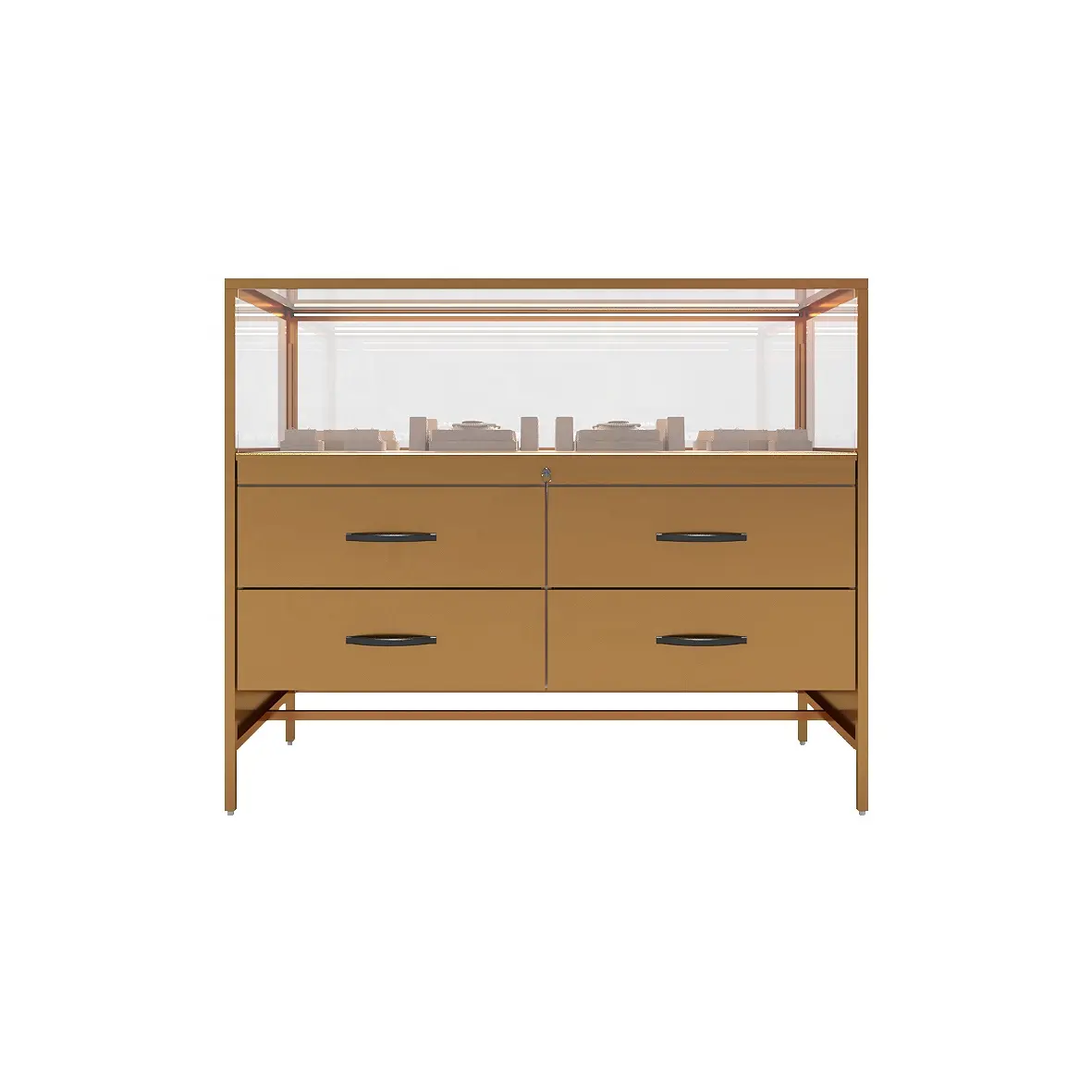
The materials used for display stands are diverse, such as ironwork, acrylic, wood, paper shelves, stainless steel, and so on. Not all suppliers can be proficient in every material. Some suppliers specialize in acrylic and plastic products, while others are skilled in metal manufacturing or wood recycling.
The tools, welding techniques, and surface treatment processes required for metal processing are completely different from those for acrylic or wood. The first step in evaluating display stand suppliers is to confirm that their capabilities meet your requirements.
2. What is the delivery cycle from order placement to delivery?
Production capacity and delivery cycle directly affect your opening or restocking schedule. On one hand, you need to clarify the monthly production capacity limit and standard production cycle of the supplier. On the other hand, you should understand their emergency response plans during peak seasons or emergencies.
Ask the supplier to break down the cycle into: design confirmation, prototyping, sample modification, mass production, quality inspection, and delivery. Also, inquire about "the flexibility margin for urgent orders". The delivery cycle provided by the supplier needs to be consistent with your store opening or reset schedule.
Industry data shows that the standard delivery period for Chinese display stand suppliers is usually between 15 and 30 days, and customized solutions will add approximately 7 to 10 days.
3. What are the key steps in your quality control process?
Quality issues with display stands often occur in areas that are not visible to the naked eye: welding strength, surface coating thickness, sheet density, and packaging cushion design.
Excellent suppliers do not rely solely on pre-shipment visual inspections. Instead, they establish phased quality control checkpoints, at least including:
· Incoming Quality Inspection (IQC): Verifying that steel, sheet materials, coatings, etc. meet specification requirements;
· Process Inspection (IPQC): Conducting random checks on key processes during production, such as welding strength, edge sealing techniques, and hole drilling accuracy;
· Final Assembly Verification before Packaging (FQC/OQC): Simulating actual usage conditions to verify structural stability and appearance consistency.
In addition, it is advisable to inquire whether third-party testing reports (such as from SGS, TÜV) can be provided.
4. What is the minimum order quantity?
For the expansion of chain brands or the testing of new product lines, a flexible minimum order quantity policy is crucial. Many suppliers only require 2 to 3 sets for custom products, providing opportunities for small and medium-sized retailers to test concepts.
Be sure to inquire about the policy for the first sample production: is there a charge? If subsequent bulk orders are placed, can the cost of the first sample be deducted? At the same time, confirm the sample production cycle and the consistency between the sample and the actual mass production.

5. What items are included in the quotation?
The transparency of the price directly affects the controllability of the procurement budget. Suppliers are required to provide detailed quotation details, clearly distinguishing the product unit price, mold fee, packaging fee, transportation fee, customs duty, and other possible additional charges.
At the same time, understand the tiered discount policy for bulk purchases to avoid making decisions solely based on the unit price, as an excessively low quotation may conceal the risks of using inferior materials or cutting corners.
6. How do you handle packaging and logistics?
The packaging method and transportation plan have a significant impact on the rate of goods arriving in good condition and the logistics cost. Ask the supplier if they have taken adequate protective measures (such as pearl cotton, bubble bags, paper corner protectors, etc.), and if they provide a third-party logistics test report.
For international purchases, it is also necessary to understand the supplier's export experience, commonly used freight forwarders, and the transportation cycle to the main ports.
7. Do you have intelligent manufacturing equipment and factory management systems?
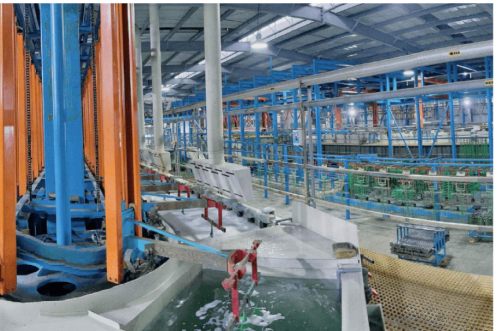
Inquire whether the factory is equipped with advanced equipment such as CNC numerical control processing, automated welding, and robot spraying. These equipment can ensure the consistency of product accuracy. The equipment accuracy error in workshop-style factories may be as high as 15%, resulting in significant deviations between the design drawings and the actual produced products.
At the same time, you can also ask about the factory area, the number of employees, the configuration of quality management personnel, and the equipment maintenance system. These hardware conditions directly reflect the production scale and standardization level of the supplier.
8. What design support services do you offer?
The procurement of modern display stands should not merely be a simple transaction of products. A supplier with complete design capabilities can significantly reduce communication costs and project risks.
It is necessary to confirm with the supplier whether they provide free design services such as CAD drawings, 3D renderings, structural calculation documents, and material lists. Suppliers with their own R&D teams can propose layout optimization suggestions based on your floor plan and present the final effect in digital model form before production, avoiding problems caused by design misunderstandings during implementation.
9. What kinds of after-sales services do you offer? How are quality issues handled?
No supplier can achieve zero defects forever. A comprehensive after-sales service system is the guarantee for long-term cooperation.
Pay special attention to asking about the warranty period, warranty coverage, repair response mechanism, and return and exchange policies of the supplier. For chain store projects, it is also necessary to confirm whether installation guidance or on-site installation services are provided. 65% of display item cooperation disputes arise from delayed after-sales service. Therefore, the clarity of the after-sales guarantee clause directly affects the cooperation experience.

10. Can you provide examples of previous collaborations with brands?
Understanding the industry experience and practical cases of the suppliers is crucial in determining whether they are suitable for your business needs.
Prioritize referring to the cooperation cases of leading brands or the experience of large-scale projects. For example, suppliers who have served well-known retail brands or participated in large-scale exhibition projects usually have higher project execution maturity.
display fixture supplierevaluation:
NO. | Core Question | Key Evaluation Points |
1 | What materials and surface treatments are you proficient in? | Confirm whether the supplier's expertise (metal/acrylic/wood, etc.) matches your requirements |
2 | What is the delivery cycle from order placement to delivery? | Break down time for each stage; understand peak season contingency plans and flexibility for urgent orders |
3 | What are the key steps in your quality control process? | Whether IQC, IPQC, FQC/OQC three-level inspections are in place; ability to provide third-party reports |
4 | What is the minimum order quantity? | Is the first sample charged? Can the cost be deducted from bulk orders? Consistency between sample and mass production |
5 | What items are included in the quotation? | Is the breakdown transparent (unit price/tooling/packaging/freight/duty)? Are tiered discounts available? |
6 | How do you handle packaging and logistics? | Are protective measures sufficient? Is there a logistics test report? Export experience and freight forwarder resources |
7 | Do you have intelligent manufacturing equipment? | CNC, automated welding, robotic spraying, etc.; factory scale and management system |
8 | What design support services do you offer? | Are CAD, 3D renderings, structural calculations provided free? Does the supplier have an R&D team? |
9 | What after-sales services and quality issue handling do you provide? | Warranty period, coverage, response mechanism, return/replace policy, installation guidance |
10 | Can you provide examples of previous collaborations with brands? | Experience with leading brands or large-scale projects; industry maturity |