Let design break free from the constraints of two dimensions
The greatest challenge in spatial design lies not in imagination, but in the constraints of craftsmanship. Particularly with complex geometries and irregular structures, designers must consider: Can this material be cut to shape? Can moulds be made for such intricate surfaces? How will components connect and assemble?
The application of 3D printing employs a logic of layered accumulation to break free from these shackles.
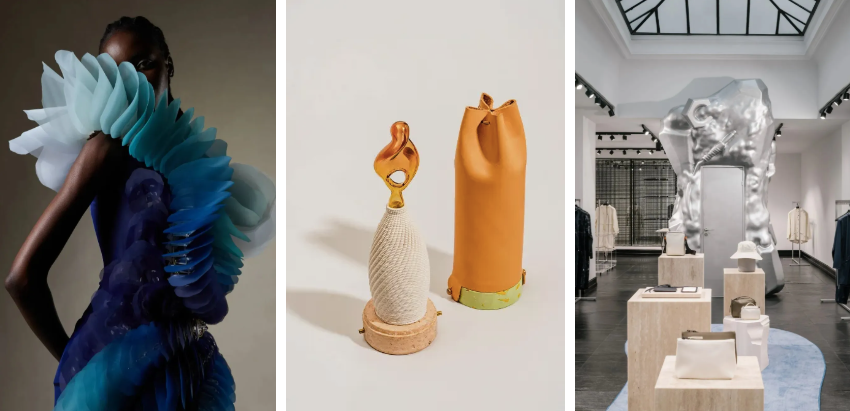
Biodegradable PHA bioplastic exhibits a jade-like lustre and silk-like smoothness during printing.
Printing materials such as bauxite ceramics and silicate ceramics combine the hardness and high-temperature resistance of ceramics, enabling precise reproduction of intricate structures like hollows and thin walls. This liberates ceramic design from the constraints of brittleness and rigidity.
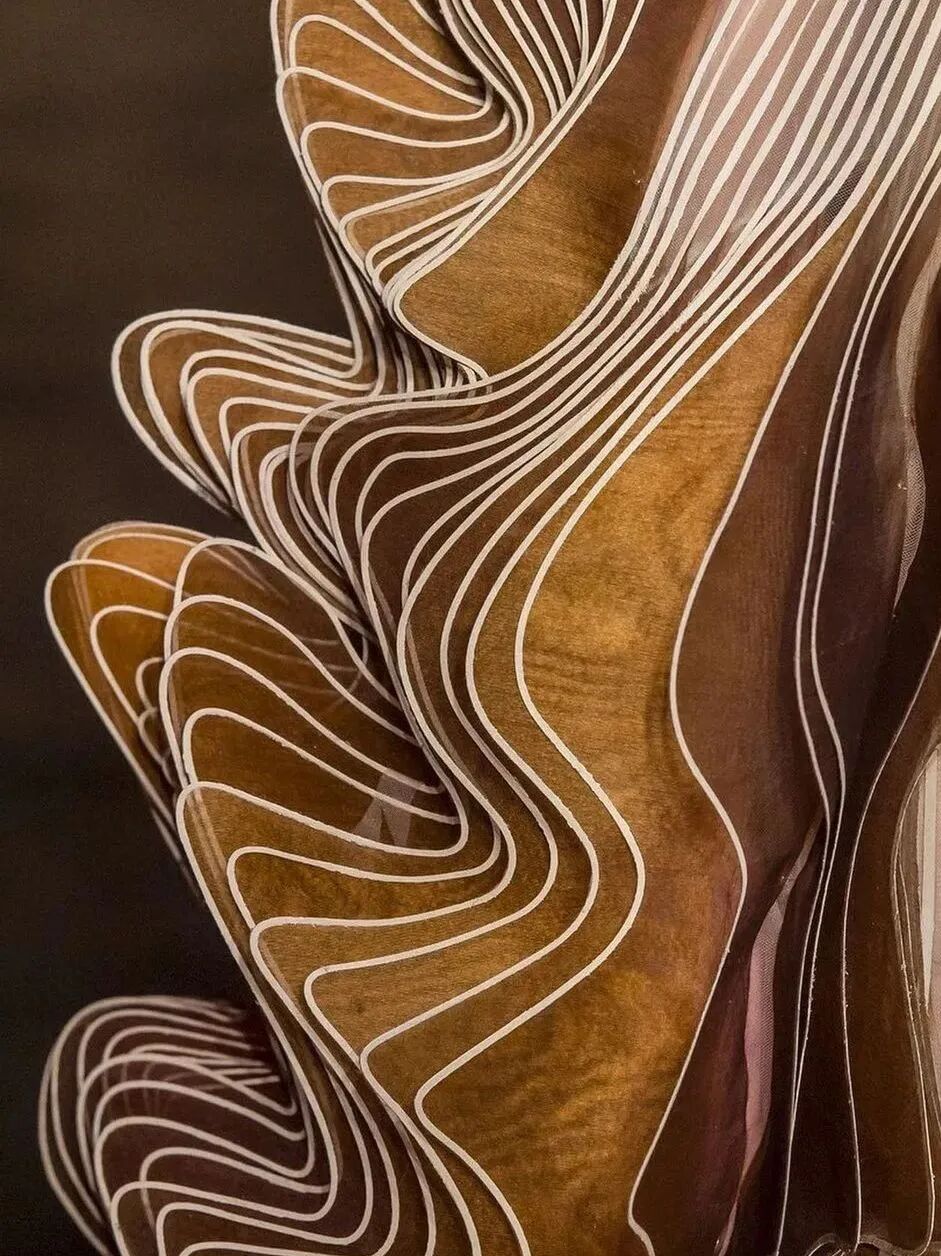
Objects printed from wood fibre materials not only retain the grain, colour and tactile quality of natural timber but also transcend the form limitations of traditional wood. They can be designed to feature diverse structures including curves and hollows.
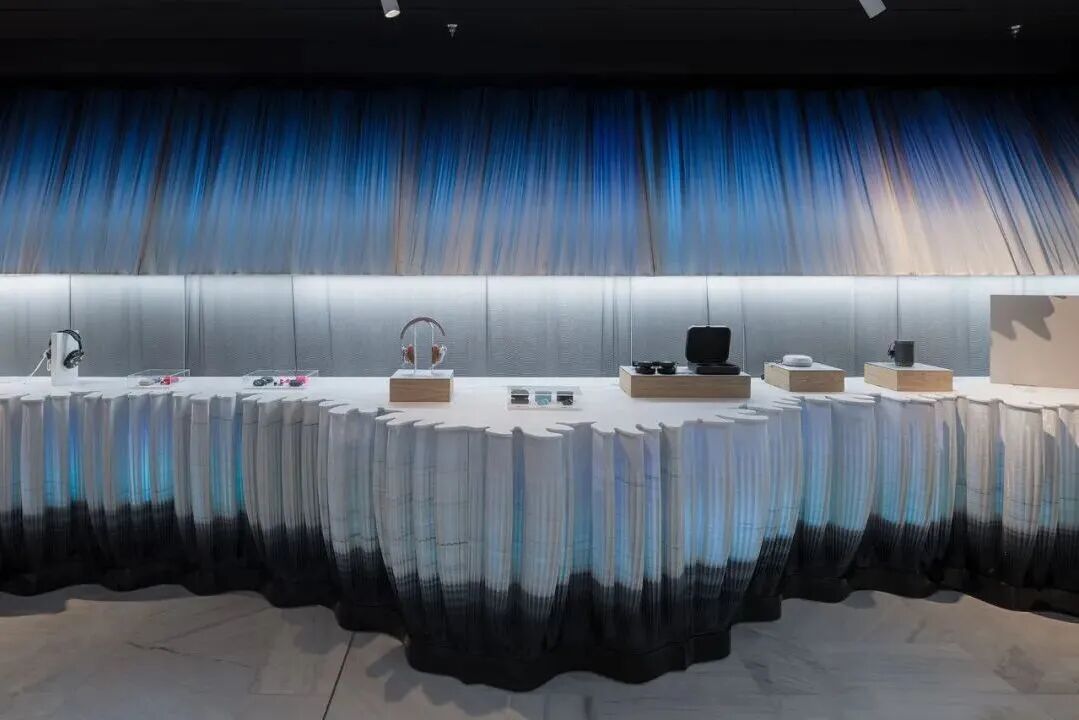
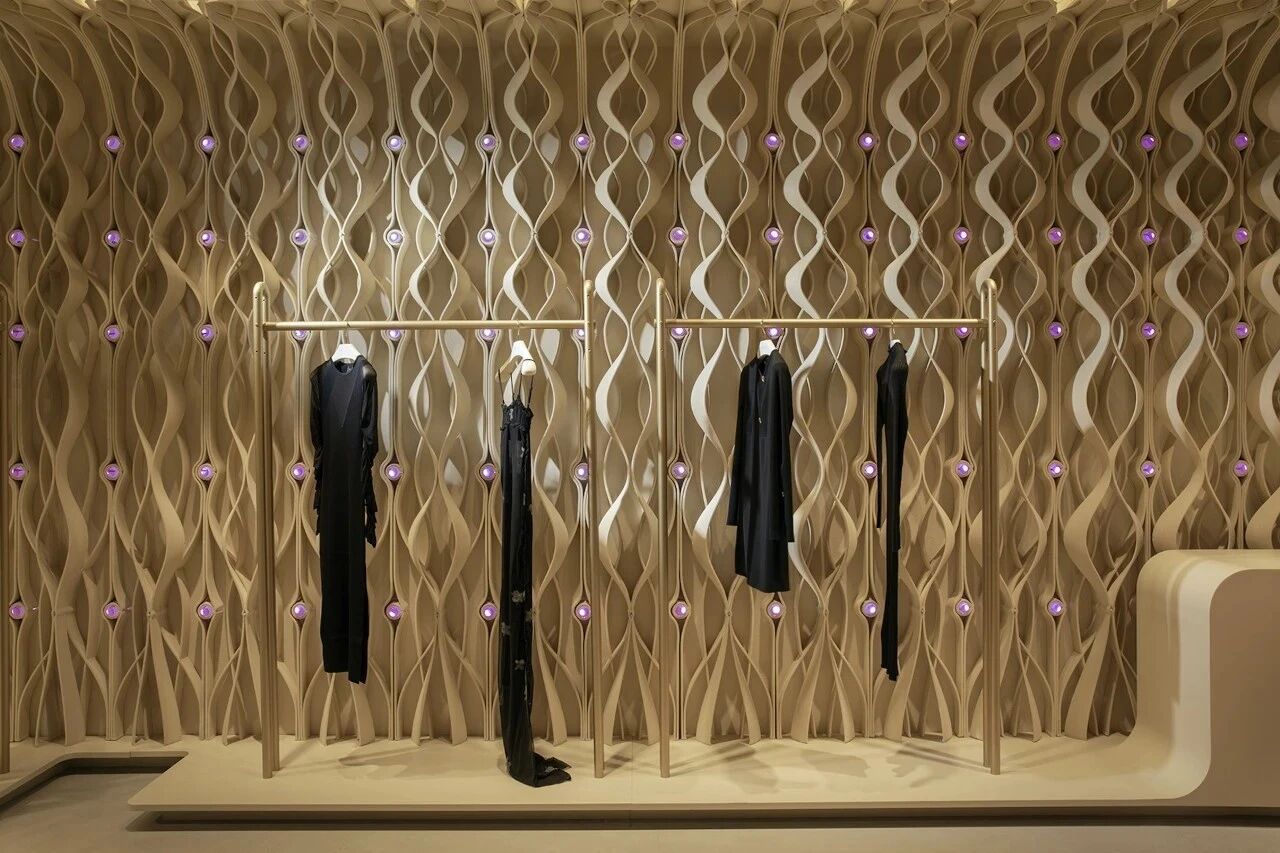
In conventional spaces, “modularity” typically relies on regular geometric forms, akin to constructing with Lego bricks, inevitably retaining a blocky aesthetic. Through parametric design, 3D printing enables the precise fabrication of irregularly shaped modules.
Each modular unit possesses its own distinct form and texture. Combined with intrinsic connection systems such as biomimetic mortise-and-tenon joints and interlocking structures, these modules assemble into a seamless, organic whole.
Moulding space like clay
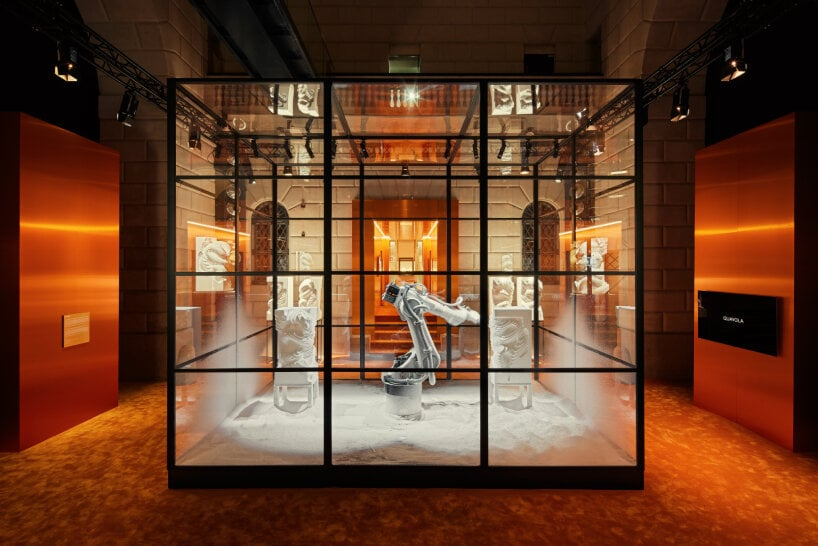
In spatial construction, 3D printing breaks through the solidity imposed by reinforced concrete by layering materials, enabling the creation of more complex morphological variations.
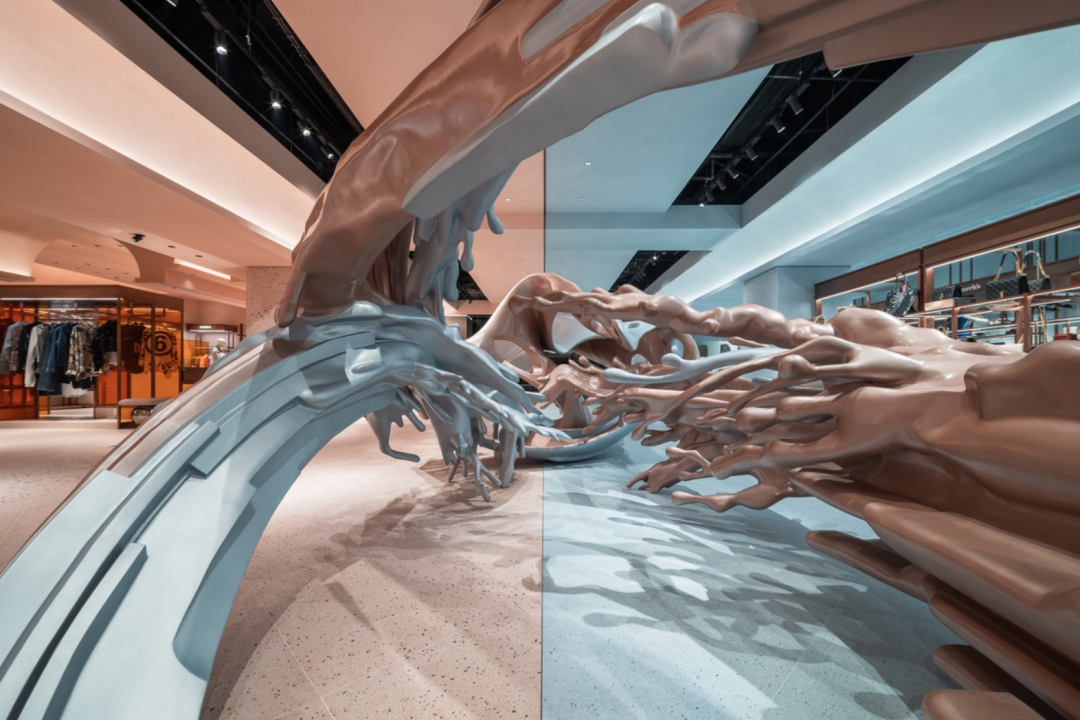
Central island installations within spaces often serve as core vessels for brand ethos and narrative. Employing 3D printing allows abstract concepts, symbols, or themes to be translated into physical, tangible installations.
For instance, the serpentine sculpture in Bulgari boutiques, crafted through motion capture data combined with 3D-printed chrome plating, interprets the brand's dual essence of fluidity and nobility.
The enraged mechanical head sculpture within the Fan Shi boutique, formed through fibreglass 3D printing techniques, evokes a steampunk-inspired surreal atmosphere.
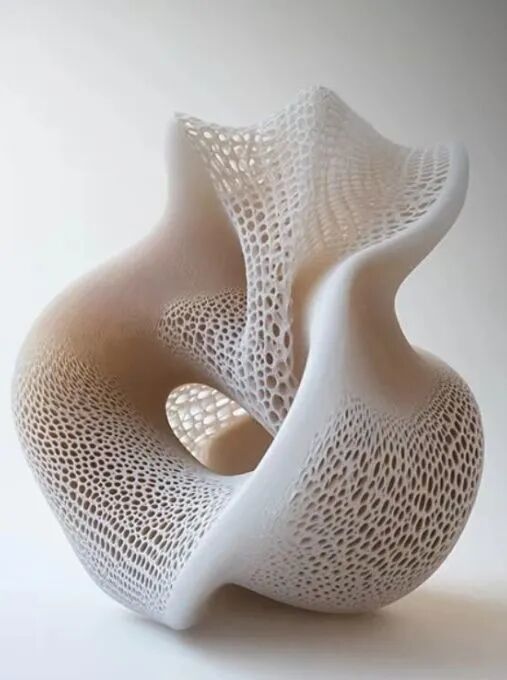
3D printing brings once-elusive concepts to life in vivid, tangible form, greatly enriching spatial expression and thereby creating powerful brand touchpoints.
3D printing expands the possibilities of façade design, enabling the construction of intricate geometric structures or undulating forms that heighten the visual tension of a building's exterior.
For instance, the Ceramic House in the Netherlands employs ceramic 3D printing to produce tiles. By layering material to create complex geometric shapes, these differently shaped tiles interlock to form a remarkably engaging, layered façade.
The introduction of 3D technology liberates spaces from fixed forms, rendering them as malleable as clay. This allows architects to sculpt freely according to creative vision, revealing richer, multi-layered transformations.
Will 3D printing replace traditional manufacturing?
The principal structure, creativity and conceptualisation of retail spaces take precedence, while their realisation relies upon a mature manufacturing system.
From a manufacturing perspective, 3D printing possesses the capability to produce complex forms. However, at this stage, it functions more as a potent supplement to traditional manufacturing rather than a competing alternative poised to replace it.
Cost remains an unavoidable barrier for 3D printing technology, particularly in high-volume production scenarios where its manufacturing expenses often significantly exceed those of conventional processes.
In the realm of mass production, traditional manufacturing techniques can churn out components by the thousands per hour. By contrast, 3D printing relies on a layer-by-layer deposition method, typically resulting in slower production speeds and markedly lower efficiency than conventional methods during large-scale manufacturing.
It is evident that traditional manufacturing, with its marginal cost advantages and production speed, has established boundaries that 3D printing struggles to overcome.
This technology is positioned more towards scenarios requiring high customisation and unique designs, such as art installations, bespoke exhibition displays, and distinctive structural components.
Retail space construction strategies can integrate these two manufacturing approaches: employing traditional techniques to form the spatial framework, while utilising 3D printing as focal accents to infuse uniqueness and narrative into the environment.
In the foreseeable future, the relationship between 3D technology and traditional manufacturing will not be one of revolutionary replacement, but rather a symbiotic evolution. Based on their respective core strengths, they will engage in precise division of labour and collaborative synergy.